A Conversation
A Conversation
David Cass & Dr Gary Husband – Professor of Professional Education at the University of Sunderland – reflect on Elizabeth Ogilvie & Robert Page’s exhibition Conversation with our Ocean, on view for its final weekend at Summerhall Arts in Edinburgh. Placing the exhibition within the context of accelerating AI development and the climate crisis, they consider the extraordinary, often under-recognised potential of the natural systems that sustain us, and ask what we stand to gain by protecting and restoring what already exists.
I
In a review of an exhibition by leading environmental artists and commentators, you would rightly be somewhat surprised to find the authors beginning on the subject of artificial intelligence. Yet this is where we find ourselves in the early 21st century, when critically reflecting on almost any aspect of life now seems inevitably to involve some element of this pervasive technology. To be clear, these artists are not engaged in the production of synthetic imagery – quite the opposite. They are wholeheartedly involved in an ongoing creative conversation centred around the immense potential for re-engagement with the natural world, and for seeking solutions to Anthropocene-specific problems from within the environment. But their latest body of work also brings into stark relief the tension between the accelerating development of AI systems and the urgent need to protect the living ones that sustain us.
Recent estimates level an accusation, that roughly half of newly published webpages now contain some AI-generated or AI-assisted text.¹ The figures in relation to the total energy costs of AI use in the production are beyond staggering. Before we explore that net cost to resource, it is worth noting that what we refer to as AI is in fact not intelligence in any way that we might recognise in human society. True, Large Language Models (LLMs) can perform immense volumes of lookups and scan data sources at rates that far exceed human capability by factors of millions. But a fundamental element of human intelligence is self-awareness and whilst LLM platforms can emulate what self-awareness may look like, they are not sentient.
The most recent figures for annual energy consumption (globally) of data centres sits at somewhere close to 490 TWh. To give this some context in 2025 London consumed 29.6 TWh of energy. The energy consumption of AI is currently more than 11 times that expended in running one of the most energy hungry urban centres on the globe. When you consider that the vast majority of this energy is consumed not in the pursuit of science and progress but in basic enquiries and the production of prompt-generated content, it is hard to begin to see how any justification can be made to expand this provision still further. Yet, projections are that we will need a doubling of capacity and consequently energy expenditure in the next five to ten years.
We hear justifications for this from modern luminaries who head up some of the largest tech companies in the world. The justifications follow the logic that we need to unleash the massive computational power of the ever increasingly powerful LLMs to solve the ever-worsening impact on the global climate that humans (and their resource depletion) make as the century rolls on. The irony in the need to use an increasingly energy hungry tool (6% of all UK and US electricity supply²) to solve a self-imposed and worsening climate crisis because of our dependence on energy is seemingly lost on late-stage capitalists.
The huge (and now endangered) elephant in the room here is that whilst massive tech companies may state we need their AI to solve issues including the climate crisis, are we to believe that their motivations are based in altruism and a desire to solve broader global and economic ills? History does not support that assertion and the short termism of society and our misalignment and disconnect with the natural world and its rhythms pay stark testament to that. We see little in the way of cross-company cooperation, transparent research or collective governance. We see no collective approach, which would surely reduce the duplication of infrastructure, the associated energy demands and carbon emissions. Profit and power drive technological advancement and not a desire to improve the human condition.
At the most basic level of assessment we only need to look at how deeply embedded digital integration is in all our lives, in almost everything we use, every day. Agriculture, transport, health care, energy, education, commerce (ad infinitum) are all harnessing “benefits” which are at the basic level both profit (provider) and convenience (consumer) led. In the vast majority of cases impact on environment is barely considered by the population of end users. Most people don't even realise its ever-invasive presence. We aren’t so naïve to deny the benefits of medical advancement and technological convenience but, we all need to stop and ask the critical question, what is the cost?
What we are losing is the ability to function as a society without the assistance of software and AI driven hardware. The proverbial horse has not only escaped its stable, it’s some way over the hill and descending over the horizon; the stable door banging in the (storm-driven) wind.
It is, perhaps, too late to roll-back on AI. It runs, drives, develops and supports so much of human technology that in many spaces, we would come to a complete standstill. So, what do we do?
As a society, humans are inherently shortsighted and short-termist. We tend to vote in our own interest and preserve above all else that which is directly in front of us. Consequences that stretch beyond our own immediate occupation of a brief part of human history rarely factor in societal decision making. The immediacy of the human condition gives us much to look back on and regret and yet, much of the worst of human society persists. There is absolutely no doubt that what ancestry we have will lament the shocking lack of human action, collaboration and care given the overwhelming evidence presented to us about not only the impact of our actions but our failure to act.
If we were to take a deeply pessimistic view, a reasonable assertion could be that we have once again created a perfect storm. Ideology and profit-driven convenience meets short-termism. However, as bleak a picture as we may have opened with, there is hope (another aspect of the human condition that sets us aside from AI) and that hope is embedded deeply in our natural environment and those who champion it.
“Coastal and marine ecosystems are among the world’s most powerful yet under-recognized climate solutions. Mangroves, seagrasses and tidal wetlands protect communities from storms, anchor local economies, and store carbon at extraordinary densities...”
II
One goal of this piece is to contrast the rapid development of AI (and superhuman-AI) with the ancient and established living systems we have here on Earth today, already working to help us combat the effects of the climate crisis, despite all that’s been done to hamper them. Given the right attention, protection and investment, natural systems can draw carbon from the atmosphere and store it, help filter our waters, support biodiversity and protect our vulnerable coastlines to enormous effect. Imagine these extraordinary systems, spread across the planet, freely available to us, more adaptable and interconnected than any synthetic product or piece of techno-engineering could ever be. The Earth and its oceans possess a natural capacity for resilience and self-healing, if only we allow it.
Yet roughly twelve times more money was forecast to be spent on AI development in 2026 than was invested in nature-based solutions worldwide in 2023.³ And that within this already wildly underfunded category, “blue-carbon” ecosystems (those that do the most work: the mangroves, tidal marshes and seagrass meadows) receive an even smaller share. A recent report⁴ states that these incredible ecosystems attract less than 1% of international climate finance.
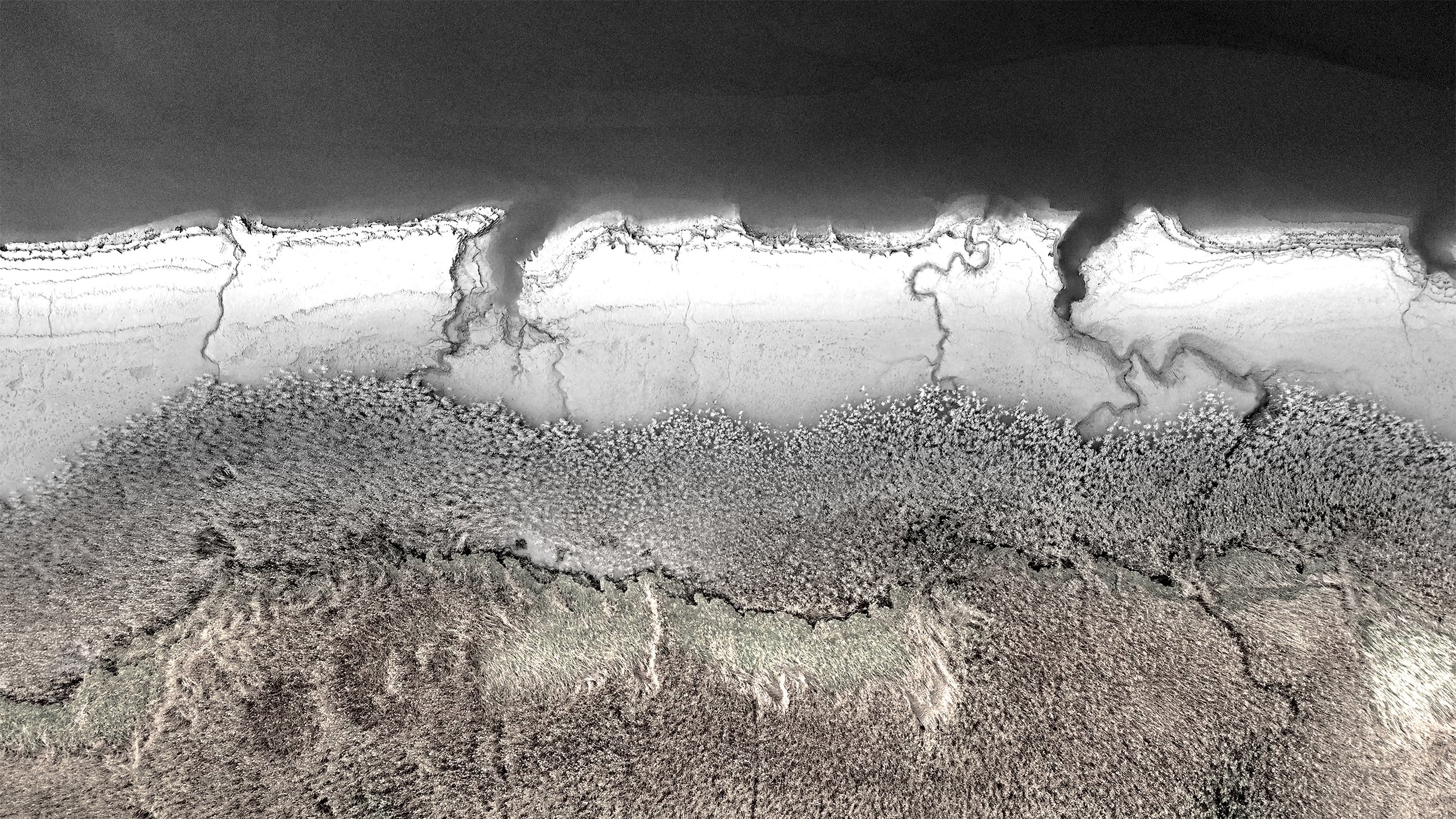
Meander | Mud & reeds | Print
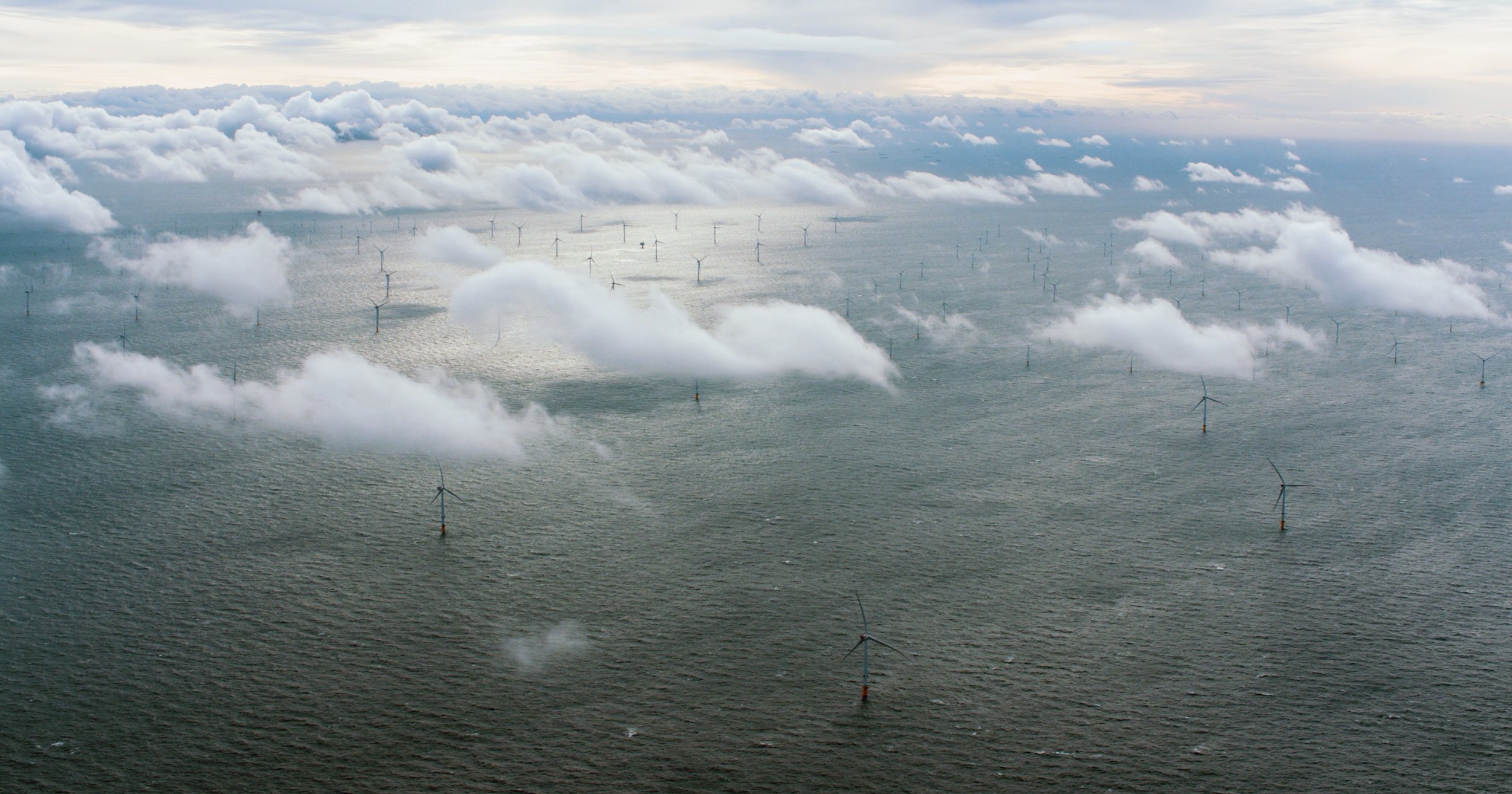
Documentary film still | Vestas Borssele
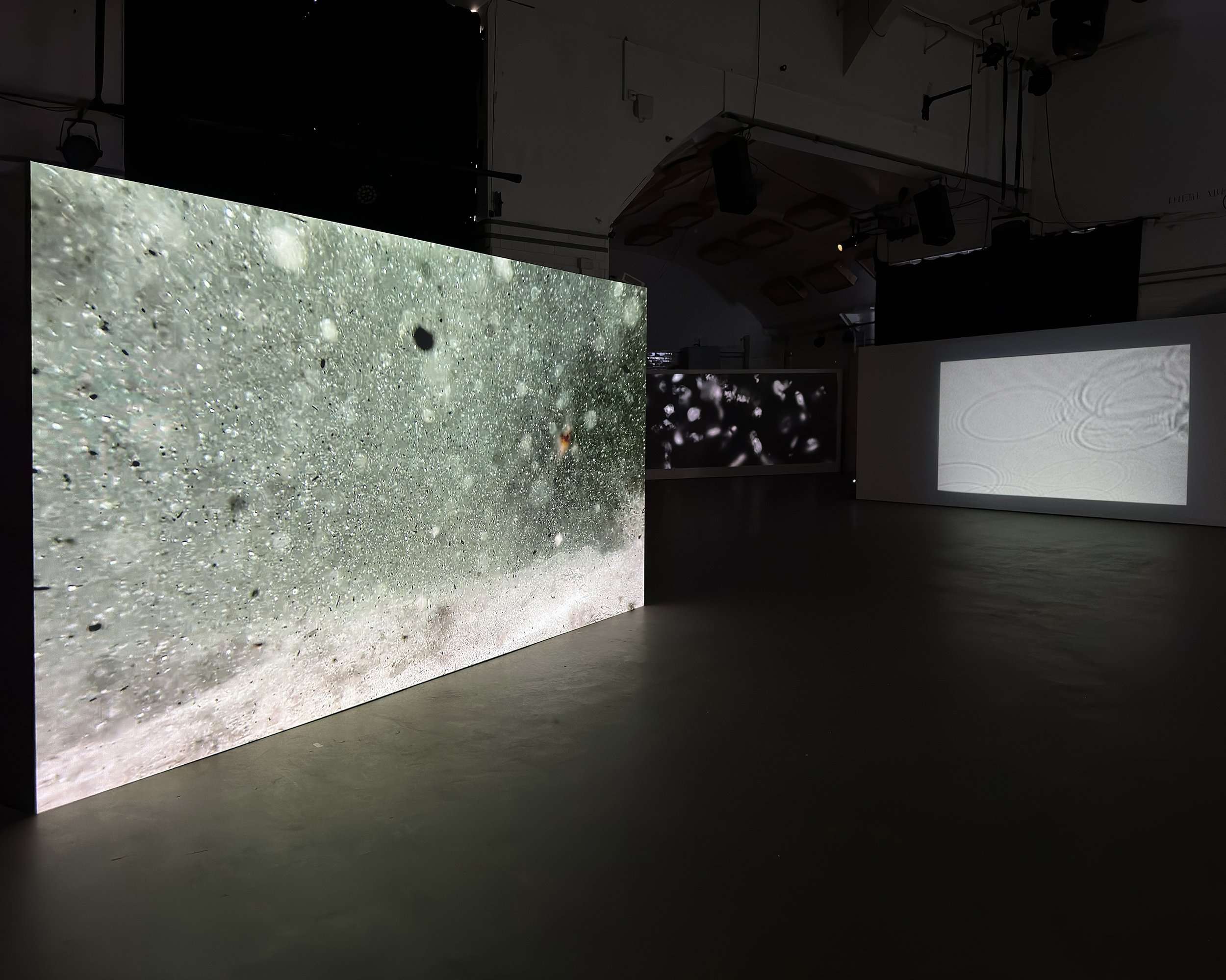
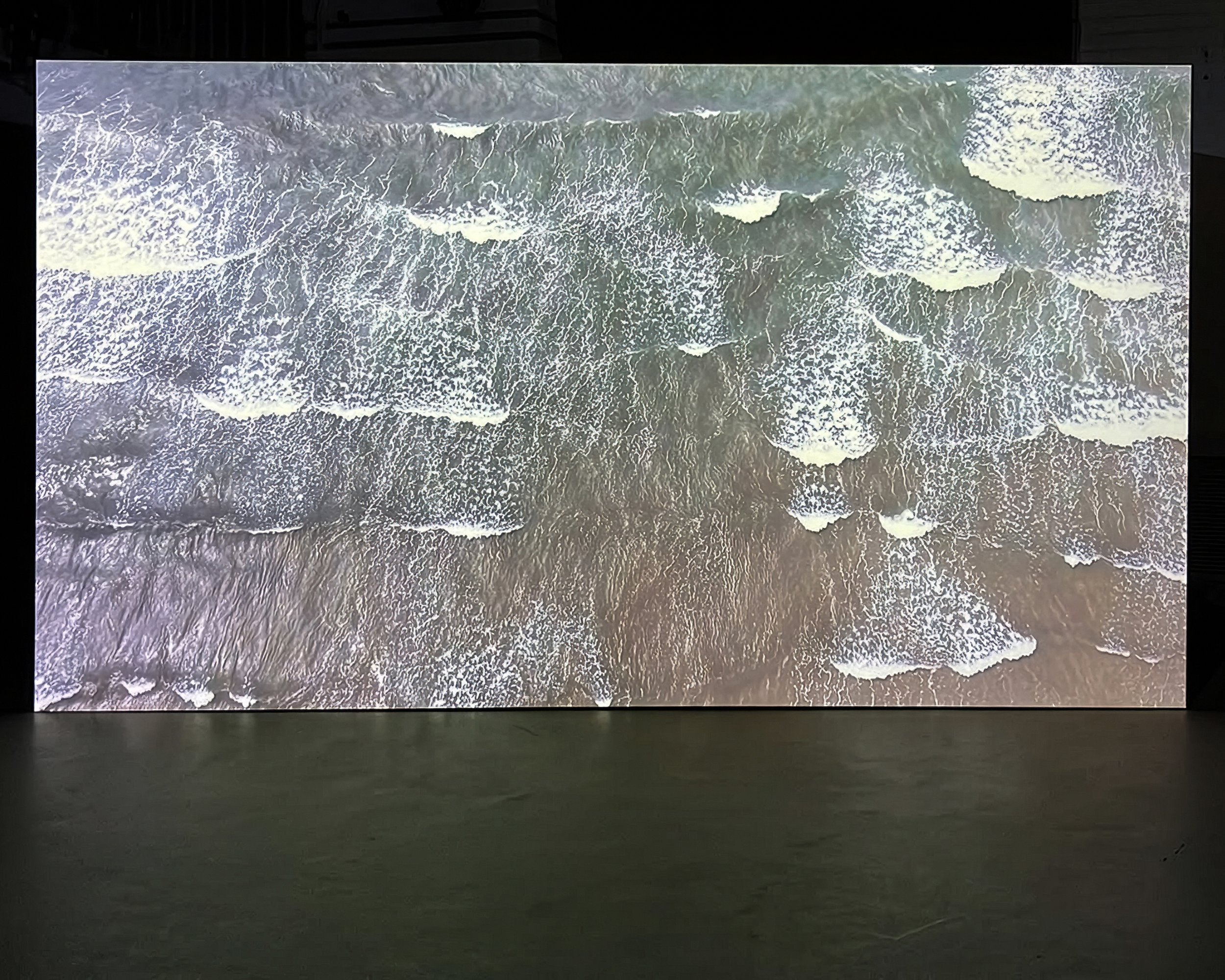
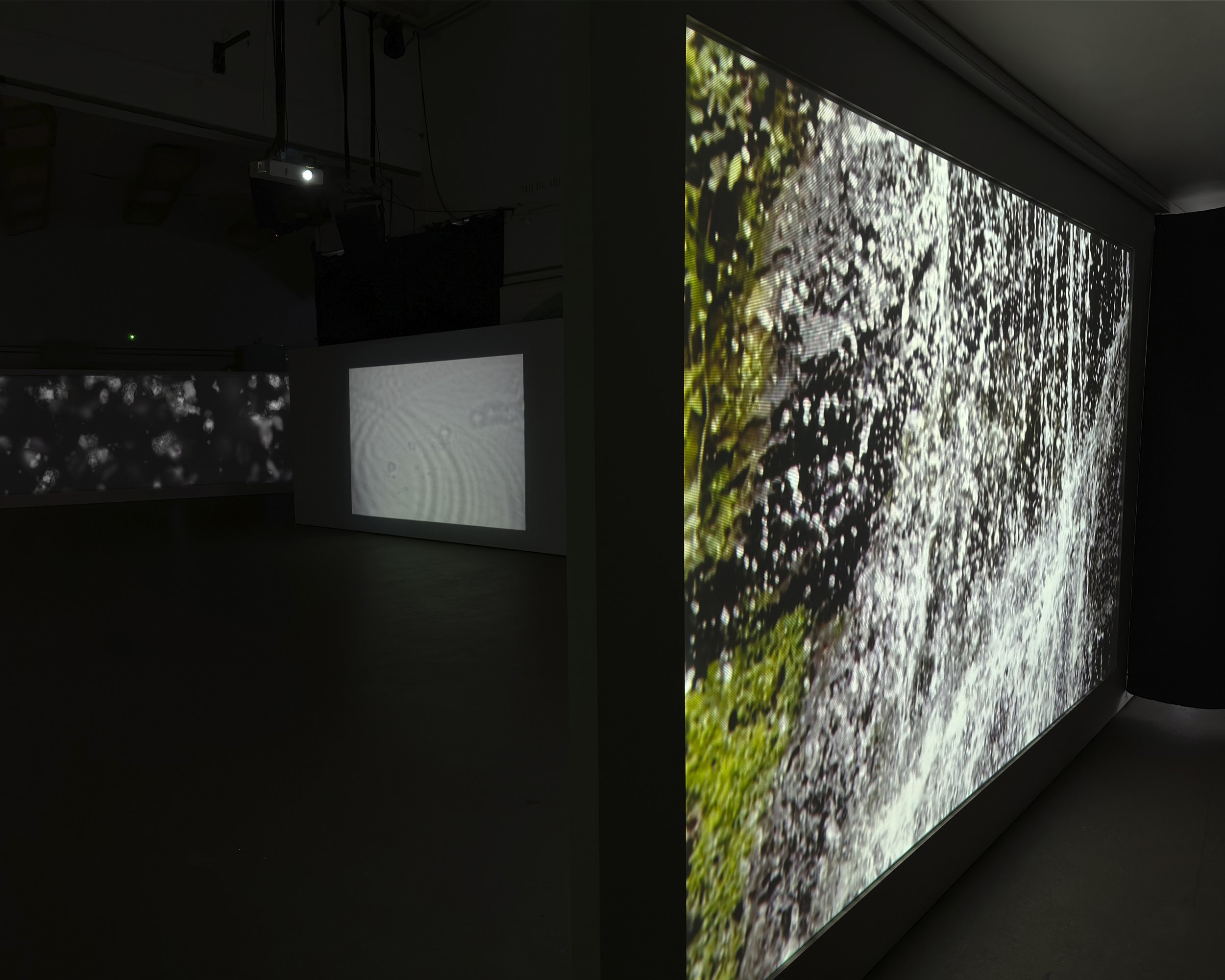
A new exhibition at Summerhall Arts in Edinburgh places these very habitats centre stage. Filmed in Atlantic and North Sea waters, Conversation with our Ocean by Scottish artists Elizabeth Ogilvie and Robert Page unfolds as an immersive journey from seabed to sky. Predominantly formed of moving images, the work is presented in a range of scales so that we might discover the exhibition as an enchanted alternative universe. Each screen becomes part of the greater whole; a portrait of place, built film by film – some projections well above head height, others small and positioned on the floor so that they invite close inspection. Microscopic plankton swim across the room, enlarged to the size of jellyfish. Aerial footage projected from the floor up that we might fall into. Enlarged underwater grasses stirring in slow-motion currents. Individual water droplets swelling to several times their size. And then the viewpoint shifts skywards, pointed toward an immense expanse of sea and sky; the deadpan and abstract side by side.
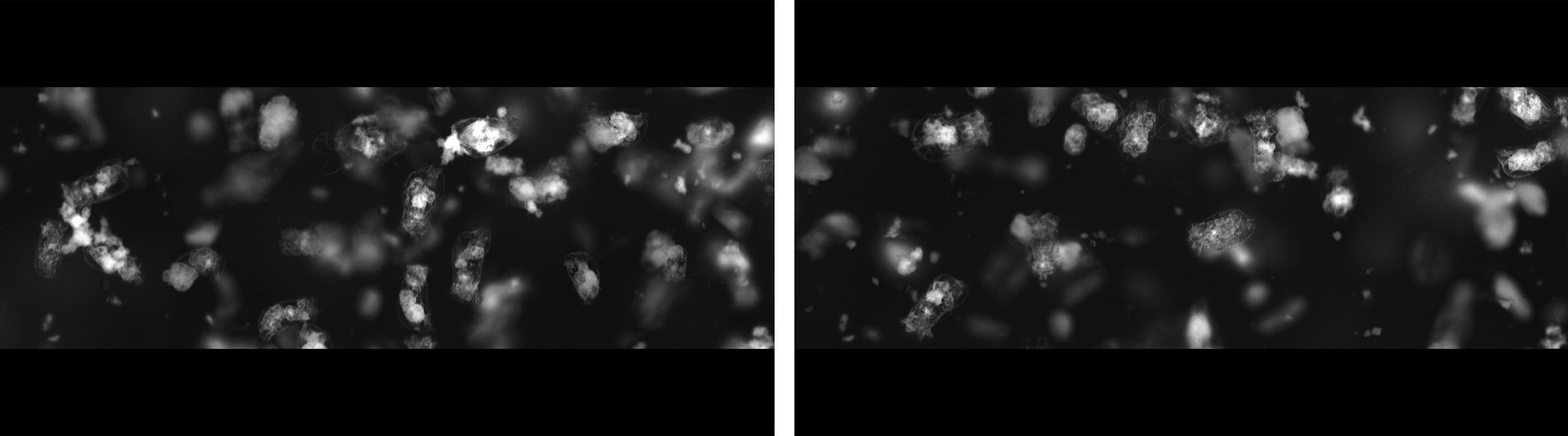
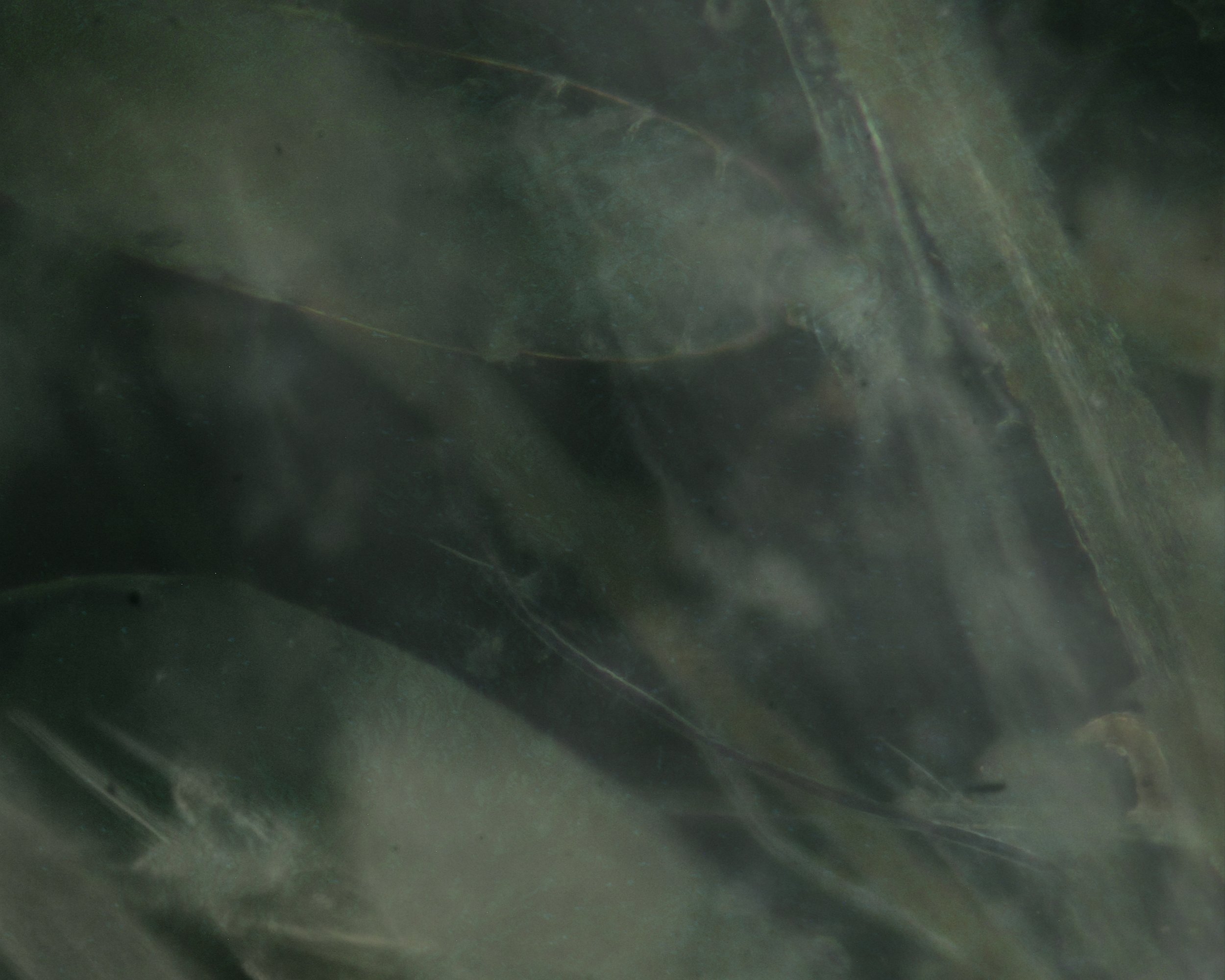
Microscopic projection stills | Plankton
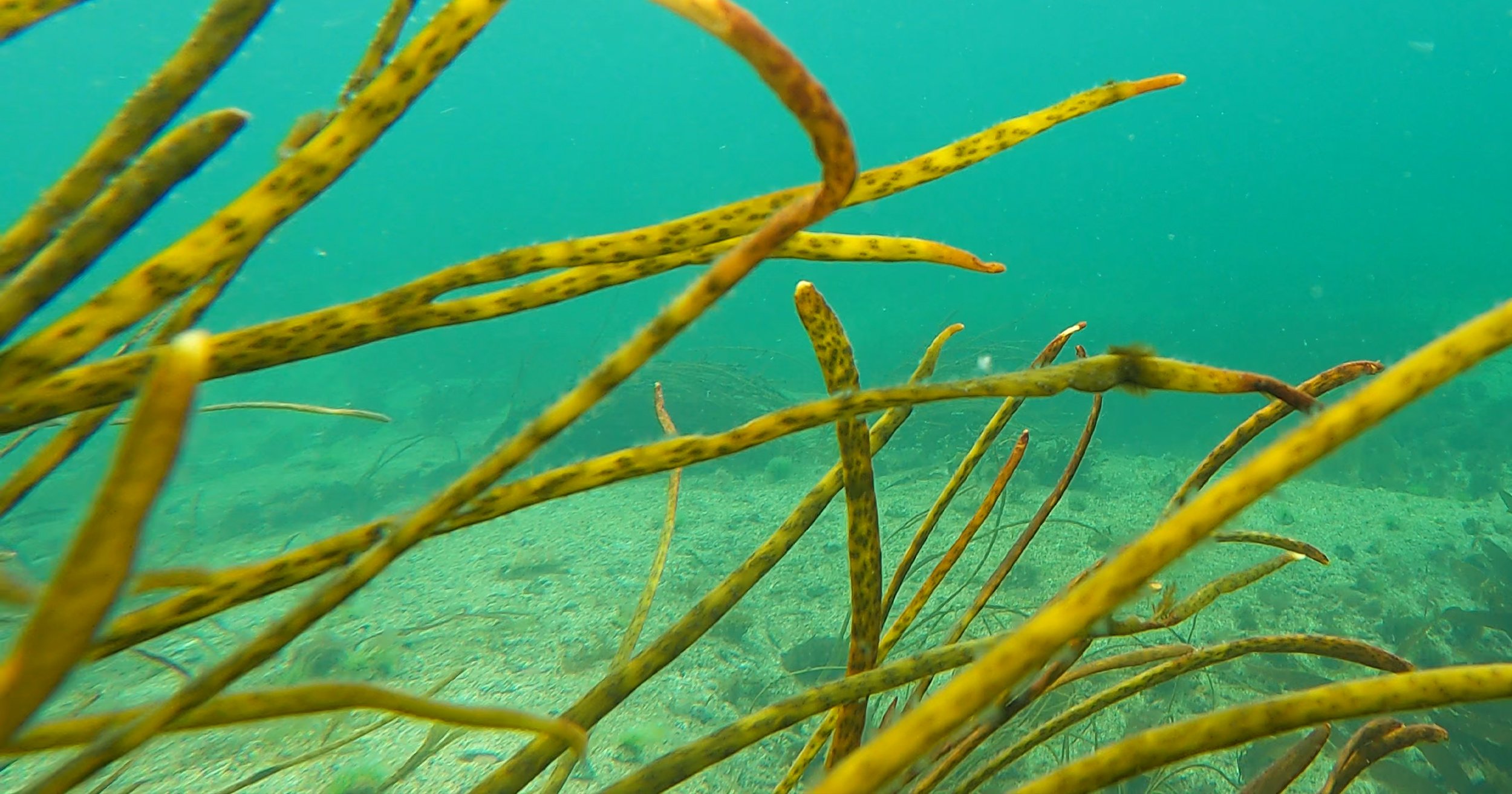
Projection still from Into the Oceanic | Seagrasses
Moving between these artworks, we are given the opportunity to reflect on how much of the living world exists beyond our habitual field of vision, yet this is no surrealist fantasy: the films document real ecosystems, brought together by the artists in a single encounter. The exhibition allows us to move between environments and scales that we could never experience without their work.
Ogilvie & Page do not identify each filming location by name, yet examples of the ecosystems they explore can be found all around Scotland. Consider the seagrass meadows of Loch Craignish, on the country’s west coast. These underwater flowering plants occupy just 0.4% of the loch, yet surveys have found that they host 68% of the biodiversity recorded in the area. Their significance lies not simply in the carbon they store, but in the extraordinary amount of life they support within such a small area. Here is a living system whose contribution to the health of its local environment far exceeds the space it occupies.
These meadows have been severely diminished and bringing them back is not straightforward. A community-led restoration project, run by Seawilding, is working to understand the conditions in which seagrass can recover. Results have varied between sites and methods, but trials transplanting established shoots have shown promise.
Closer to Edinburgh, in the waters of the Firth of Forth – not far from Ogilvie’s studio, Sea Loft – there are further signs of what these efforts might achieve. NatureScot’s review of Scottish seagrass populations records an increase in the mapped area of the Cramond meadow, from 5.46 hectares in 2014 to 14.02 hectares in 2024. At Culross, the recorded area more than doubled, from 2.04 to 4.55 hectares over the same period. Restoration Forth is also working to restore seagrass meadows and reintroduce native European flat oysters, natural filter-feeders that once thrived in the estuary before disappearing around a century ago. With the involvement of scientists, conservation organisations and local communities, hundreds of thousands of seagrass seeds have been planted, alongside the transplantation of established plants. How immeasurably more deserving of our attention these investments are.
Ogilvie & Page describe their years-long collaboration as “a project engendering hope.” Working across disciplines and in dialogue with scientists and other experts, including during an extended period at the University of St Andrews, they bring art and ecological research into conversation. Conversation with our Ocean is exactly that: an invitation to look, listen and reconsider our relationship with the living systems on which we depend.
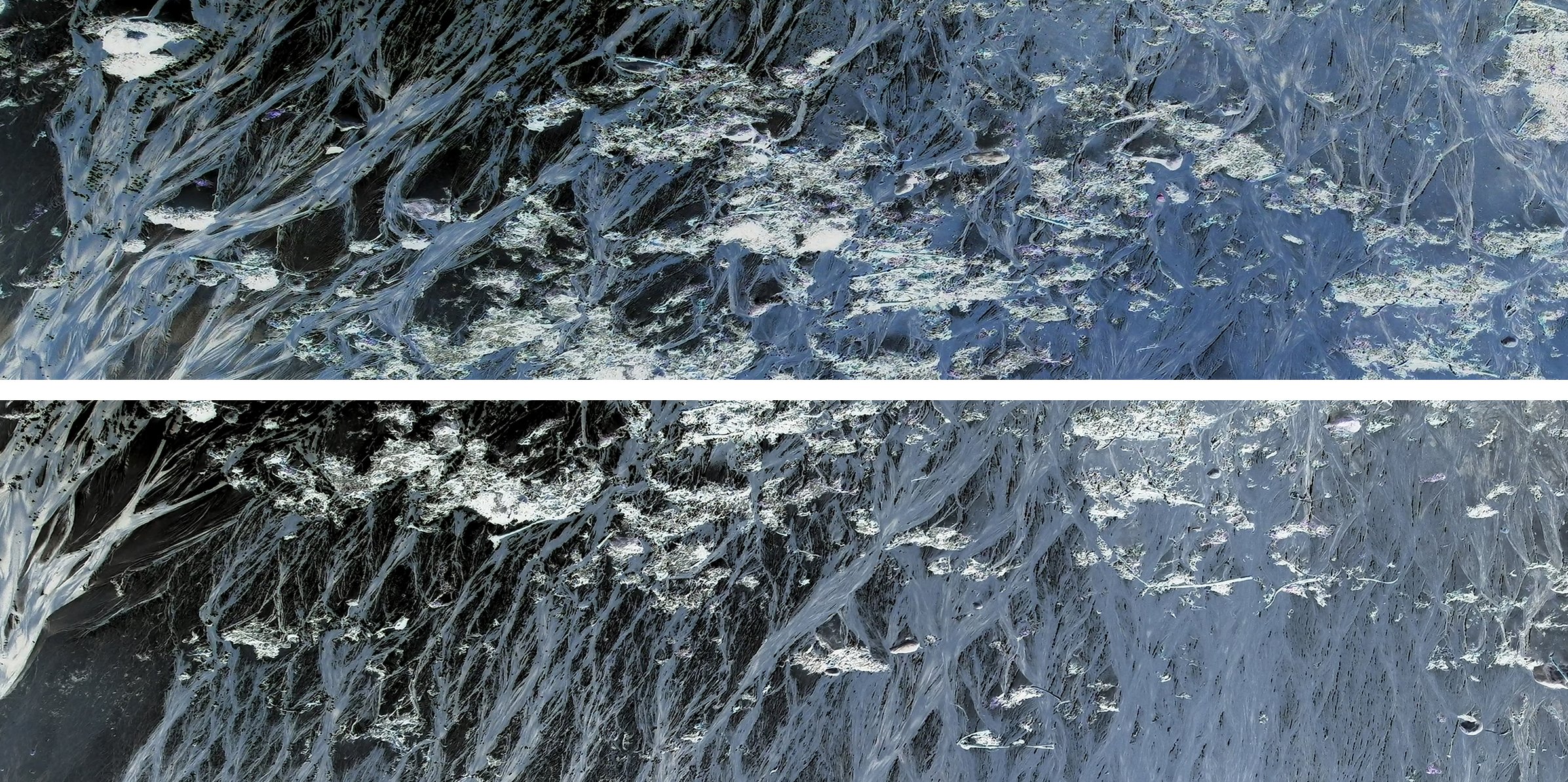
Blue Works | Prints
As tech companies race to develop increasingly powerful systems, Ogilvie & Page ask us to return to Earth. They ask us to consider the possibilities inherent in protecting and restoring. “The research and science underpinning this body of work has potential for huge positive change in the world, but without the public having knowledge of its capacity, there is little motivation to act,” professor Andrew Patrizio writes. “Art by its very nature can encourage this agency and inclusion and is invaluable at communicating such concepts.”
The topics raised in this Conversation with our Ocean extend far beyond the coastal and intertidal ecosystems it explores. They speak to a wider question of how we choose to meet the future and who gets to shape it. It is easy to understand public anxiety in this precarious period, when enormous technological and economic power is concentrated in the hands of a relatively small number of individuals whose ambitions seem to know no bounds, nor are they confined to this planet. Indeed, the technology of these self-styled pioneers litters space and has even cratered the very surface of the moon.⁵ There is no denying that we have acquired extraordinary technological capabilities. But have we thought equally carefully about the consequences of exercising them?
We need only look around for glimpses of the world we are making if we continue down this path: the catastrophic glacial collapse and ensuing floods near the Nepal–China border in August, with human-induced warming considered a primary cause; the wildfires that swept Europe this summer, amid persistent heat and severe drought likewise attributed to our emissions; and the clearing of forests and other habitats to accommodate the world’s growing glut of data centres, at the expense of other environments that store carbon, filter our air and sustain countless forms of life.
The various consequences of depleting and warming our planet don’t occur immediately, or geographically directly. Fallout can travel thousands of miles, cross continents and even generations, and it disproportionately affects the people and places least equipped to withstand it. As artist Nick Brandt has stated, “countries least responsible for climate breakdown are often disproportionately harmed by its effects.”
The imbalance is hard to ignore. This is no conversation in any meaningful sense: the vast majority of us have little say in how enormous resources are directed. The living systems that help regulate our climate remain underfunded, degraded and, in many cases, destroyed. This is not to say that technology has no role to play. It is to ask why the protection and restoration of the natural world so often comes second, if at all?
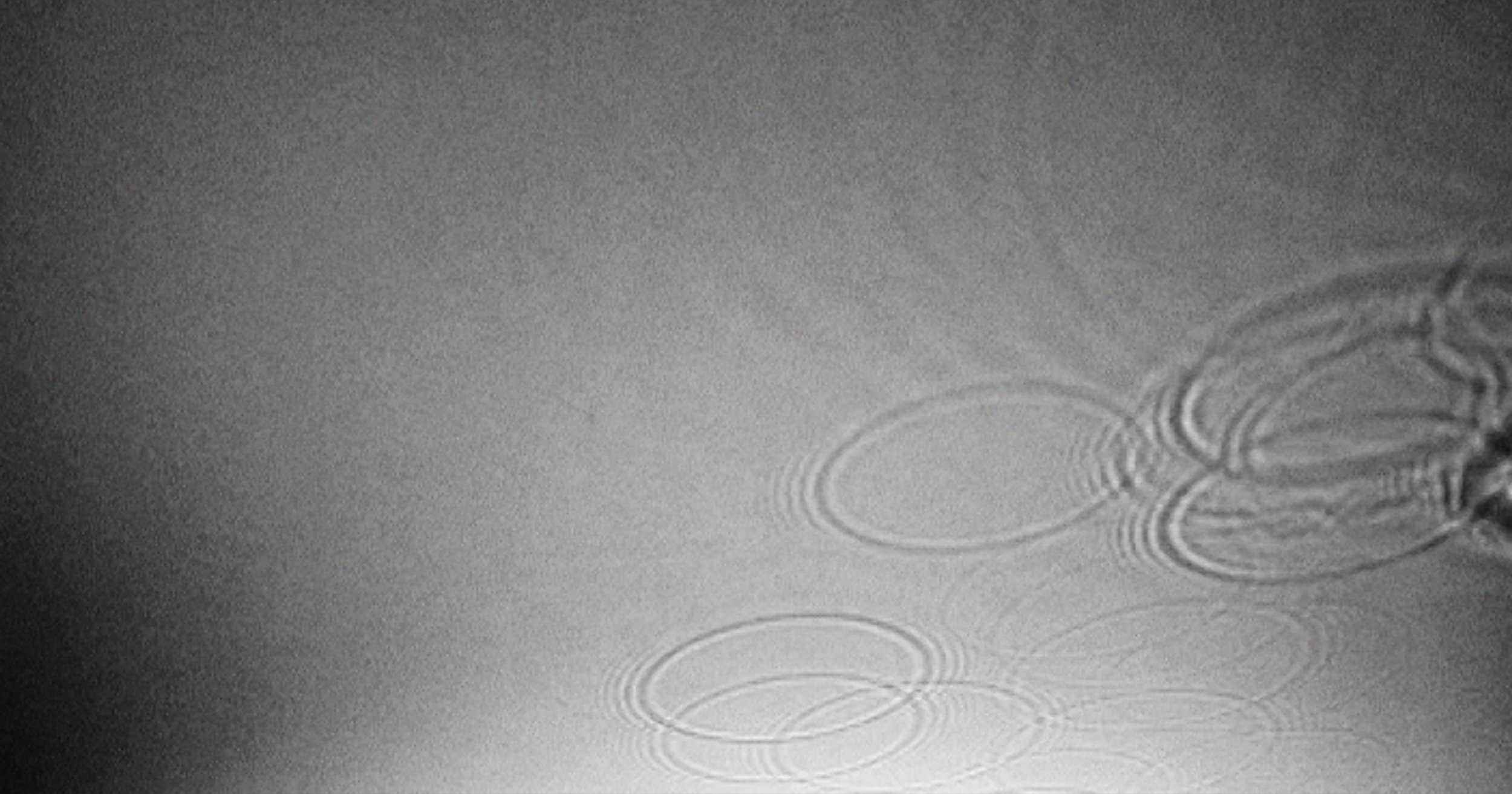
Projection still | Droplets
This is not, ultimately, a question of choosing nature over technology – the picture is not so monochrome. Conversation with our Ocean asks us to reconsider the priorities shaping our response to the period in which we are living. Through their work, Ogilvie & Page remind us how much remains to be understood, and how much stands to be lost through neglect. The exhibition makes clear what is at stake. The artists’ work demonstrates how art can shape our perception of the world, and what we consider worthy of our attention and resources. In a remarkably short space of time, we have watched a technology develop to the point where it influences almost every aspect of our lives. The question is whether we can bring that same ingenuity to preserving the Earth’s most valuable ecosystems and learn when we must exercise restraint.
[1] Researchers affiliated with Imperial College London, the Internet Archive and Stanford University estimated that roughly 35% of published websites in 2025 were AI-generated or AI-assisted; while Ahrefs analysed 900,000 English-language webpages and found that 74.2% featured AI-generated content. The latter must be treated with caution given its investment in the industry, yet even with caution, we can assume that figures for 2026 will be far more alarming.
[2] On May 13th 2026, The Guardian reported that datacentres are using 6% of electricity supply in UK and US.
[3] The UN Environment Programme’s 2026 State of Finance for Nature report estimates that US$220 billion flowed into nature-based solutions worldwide in 2023, the latest year covered by its global analysis. By contrast, US$7.3 trillion flowed into activities harmful to nature. “For every dollar invested in protecting nature, US$30 are spent destroying it.”
[4] From the World Economic Forum’s Turning the Tide: A Financier’s Guide to Investing in Blue Carbon Ecosystems, which also states that “with clear enabling conditions, blended capital and risk-sensitive financial structures, blue carbon ecosystems can become a viable institutional investment theme capable of delivering climate, nature and development outcomes at scale.”
[5] Only a couple of months ago, part of a SpaceX rocket struck the Moon, leaving a crater around sixty feet wide, as NASA subsequently measured it.
Artworks © Elizabeth Ogilvie & Robert Page | Used with permission | Text by Cass & Husband, October 2026 | Exhibition photographs by Page | Published for editorial and educational purposes | Please contact us to suggest an edit: info@alaluz.org | A La Luz is a not-for-profit eco-art project