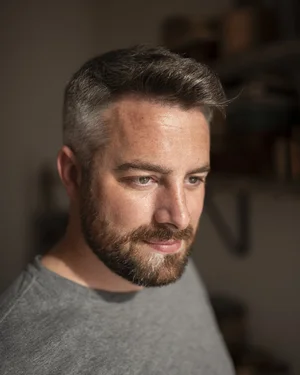
Spotlight on Nadège Mériau
I
Mal de Mer
Nadège Mériau is a French artist and educator based in London. Through alternative photographic and sculptural processes, she explores material transformation, embodiment and ecological precarity. Often working with unexpected organic matter – fish skin, bread dough, carcasses, honeycomb – she allows chance and the behaviour of the material itself to shape the outcome of each project, producing visceral works that are both tactile and deliberately unstable. Often arising from deeply felt encounters and observations, her practice blurs distinctions between the organic and artificial, the seductive and the unsettling – this is most clearly articulated in her animation Mal de Mer.
Mal de Mer is an experimental cyanotype-based animation reflecting on ecological crisis, marine pollution, global warming and the afterlife of consumer waste. Developed during a residency on the Greek island of Symi, the work draws on the island’s history of sponge diving, its distinctive marine environment, and the tensions between tourism, labour and environmental change that shape contemporary life there.
The project began, the artist tells us, after reading Bitter Sea by Faith Warn – a historical account of Greece’s sponge-diving trade. The book describes the contrasting realities of the industry – the wealth of the traders and the dangers faced by the divers, set against the deep blue of the Aegean. This intense light and colour informed the artist’s use of cyanotype, a process reliant on sunlight and time, echoing themes of exposure, revelation and residue: what is revealed and what is left behind.
At first glance, Symi appears idyllic – pastel houses climbing up steep hillsides, glowing in the Aegean sun. But this seductive beauty belies a more complex truth. During daily walks along the coastline, Mériau collected fragments: plastic debris, natural specimens and discarded materials – traces of human impact entangled in the marine ecosystem. These materials became the basis for a series of cyanotypes, later digitised and transformed through layering with sound recordings, photography and moving image.
The transformation from physical object to digital image echoes the way pollution itself mutates and persists, taking on new forms over time. On walks, the artist came across hidden waste dumps, revealing a fragile infrastructure now being addressed through new sustainability efforts. In recent years, local initiatives have begun to respond to these issues, including the introduction of solar-powered compacting bins and the transportation of waste to the mainland for recycling.
The resulting work explores the entanglement of human desire and ecological damage, through tourism, air travel, sponge diving, industrial fishing and food production. Subtle references, such as the image of a 1970s painting depicting a polar bear adrift on an iceberg, evoke the distance between perception and reality, between nostalgia and environmental decline.
Mal de Mer reflects on the contradictions embedded in our relationship with the sea: as a site of leisure and exploitation, wonder and waste. It imagines a near-future marine world inhabited by hybrid forms, their structures bearing the imprint of plastic and residue.
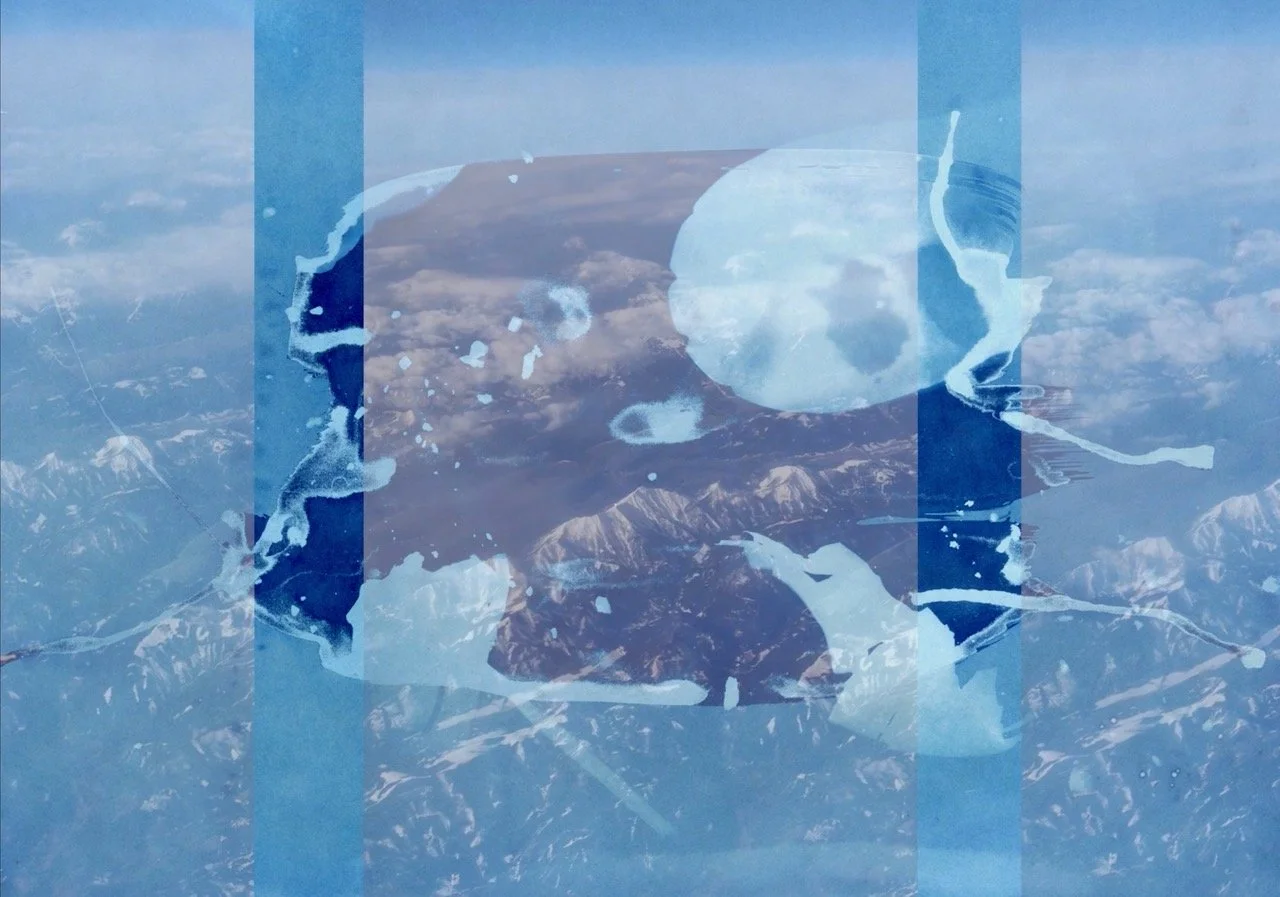
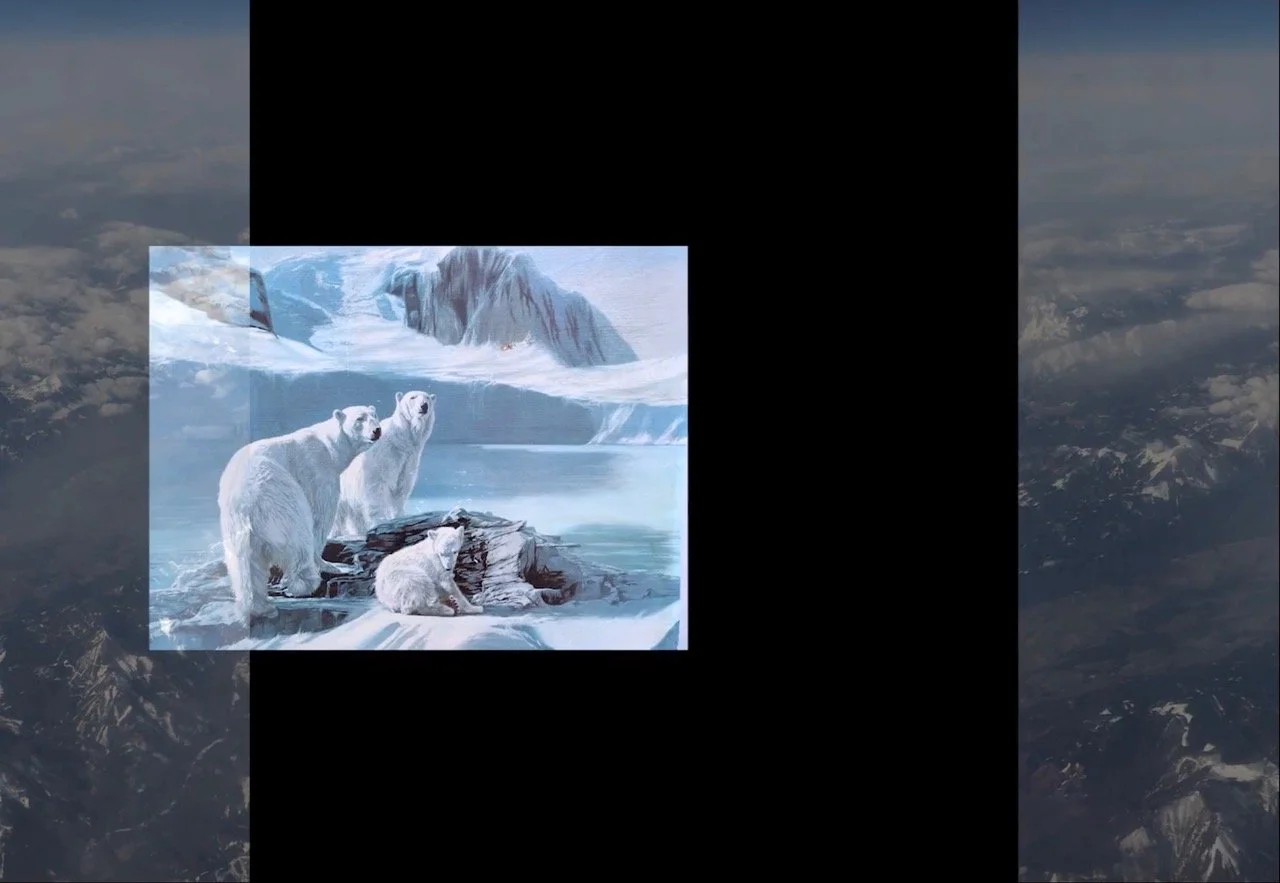
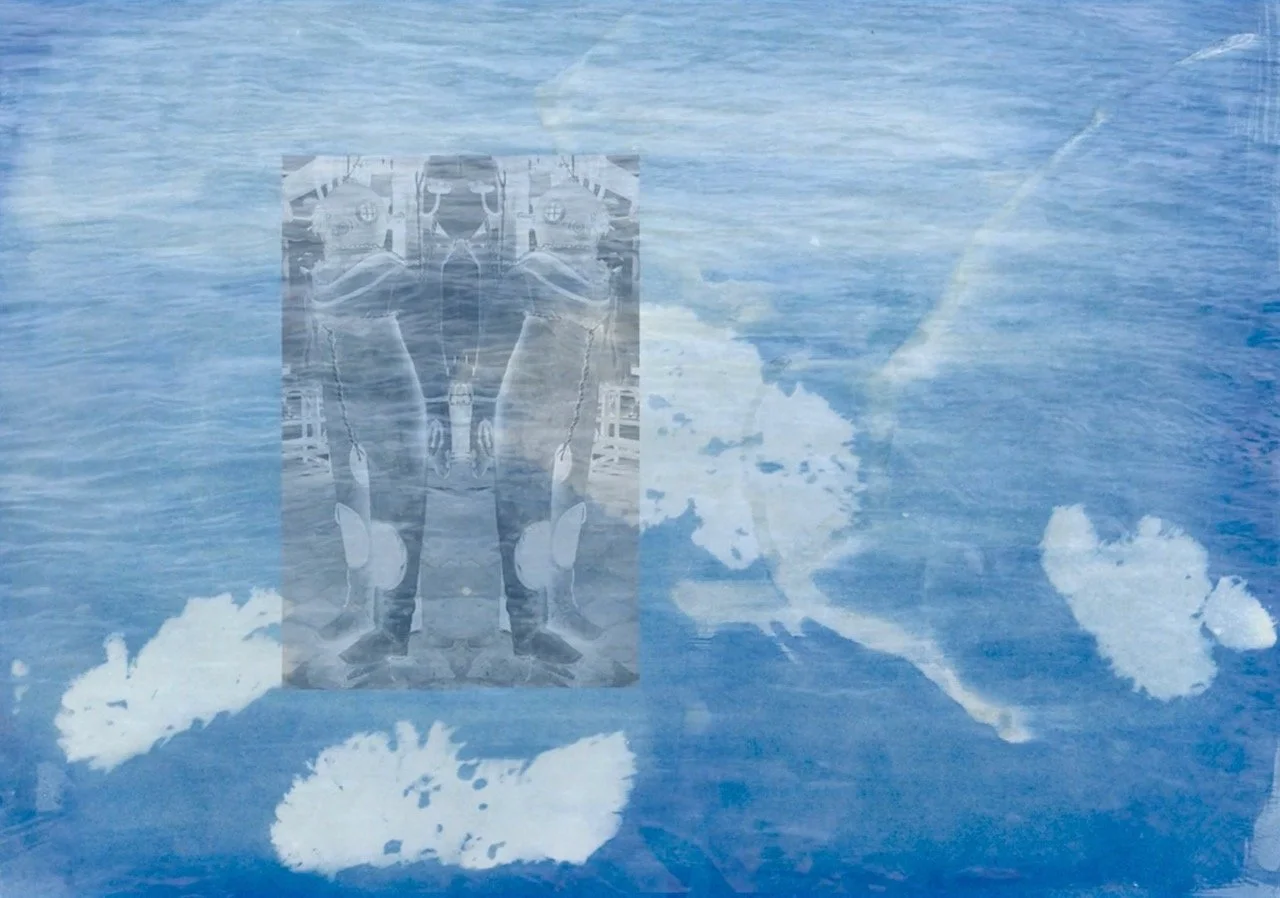
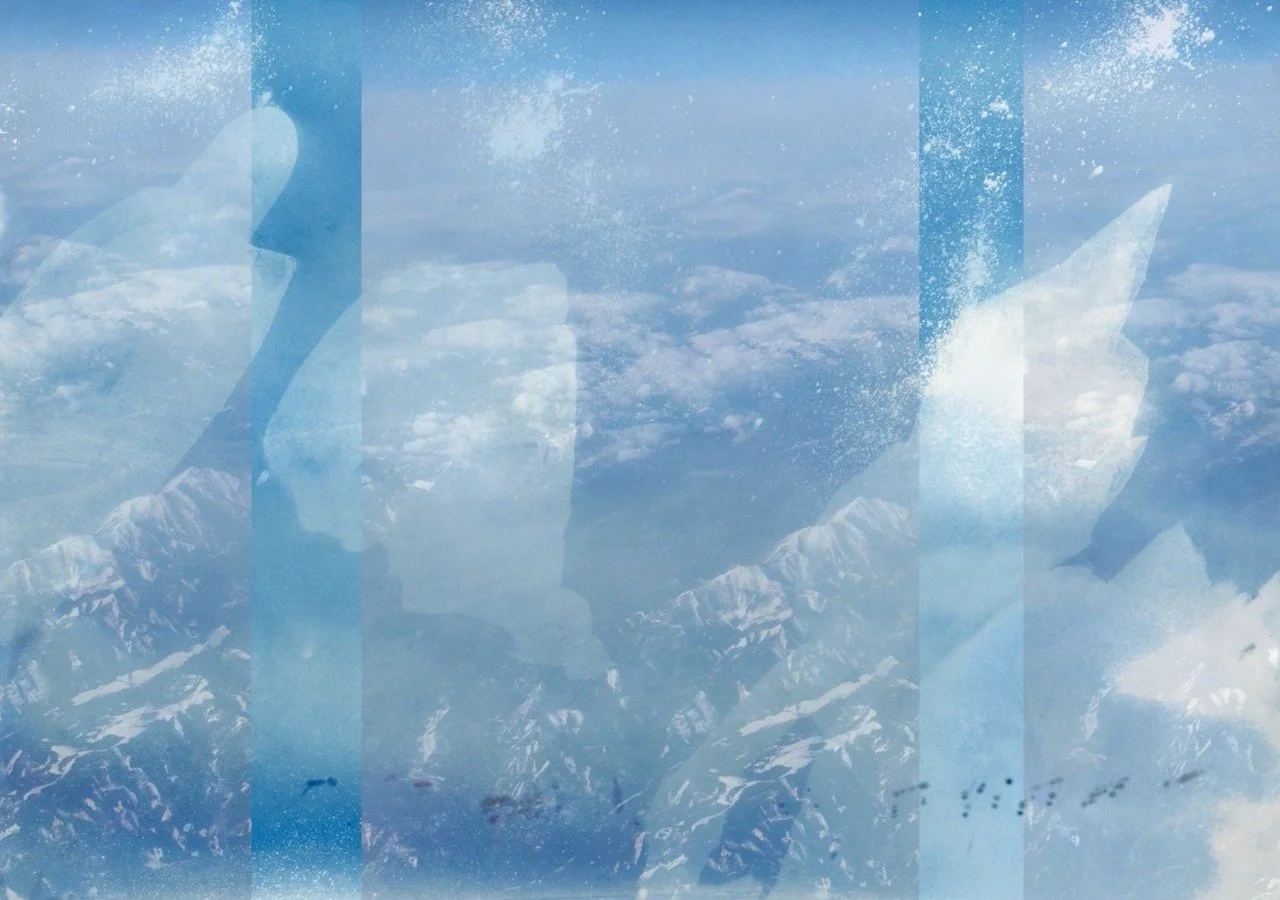
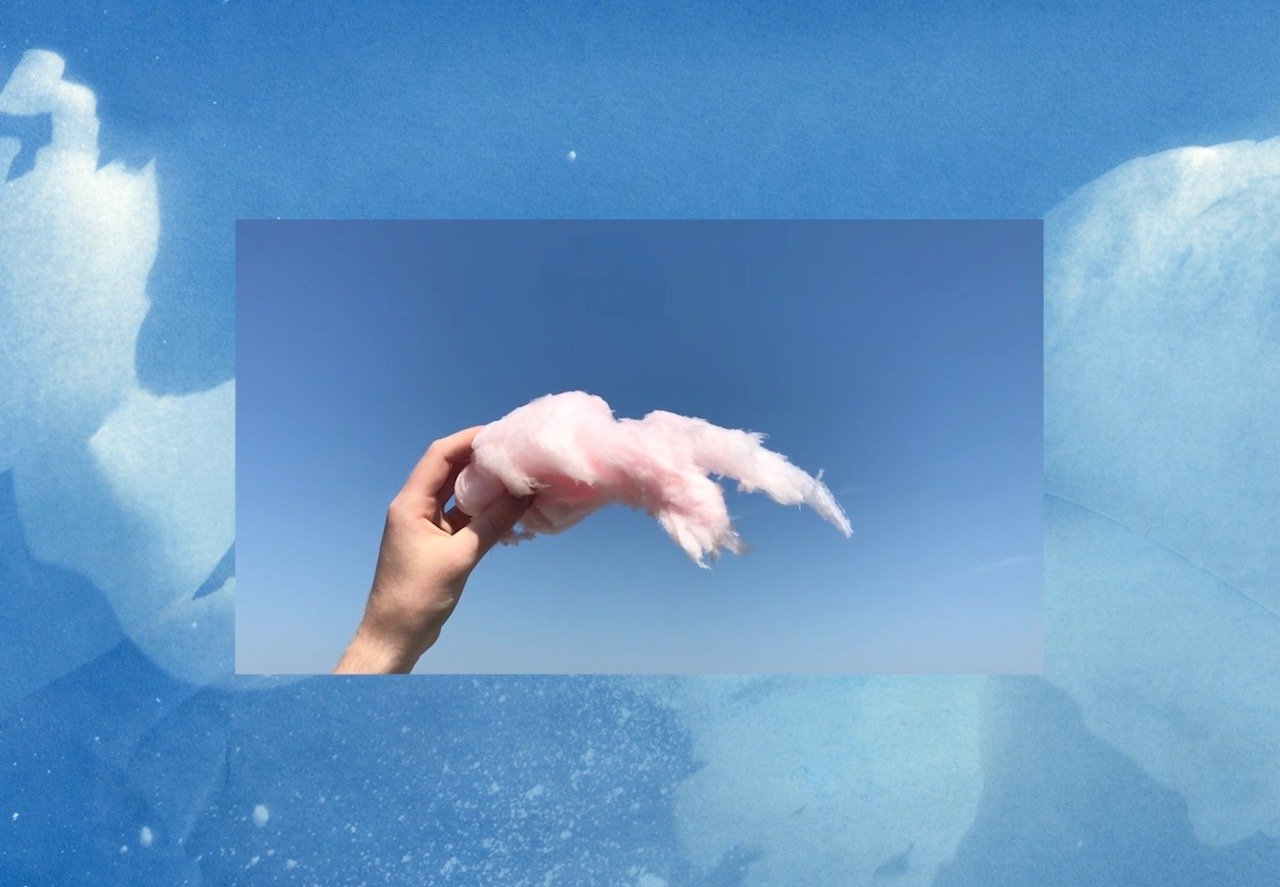
Mal de Mer (stills from animation)
“As a scuba diver, I have witnessed the decline of marine ecosystems and the bleaching of coral reefs. The sea I once knew is transforming. Mal de Mer is a quiet observation and a call for awareness. It’s a visual and sonic meditation on what endures, what disappears, and what we continue to leave behind.”
II
Photosensitive
In 2024, alongside artist Tom Norris, Mériau curated Photosensitive at Milton Gallery, an exhibition of cyanotypes, originating from ongoing darkroom explorations and dialogues among staff and students at St Paul’s Girls School. The show pointed to the transformative potential of psychological and chemical interactions, to what happens when humans or substances converge beyond linear hierarchal systems. Established artists were invited to exhibit alongside students and teachers, some accomplished artists themselves.
Cyanotypes are unique in that they serve as direct physical records of objects, yet they offer mere traces rather than a three-dimensional presence, imbuing them with an elusive and enigmatic quality. Through this early photographic process, Photosensitive placed the audience in the realms of the spectral, the evocative and the forgotten, creating a space for subconscious, liquid or aerial worlds.
Meriau's Fruits de Mer series also germinated while she was on Symi. The cyanotype process seemed the appropriate medium to encounter and capture the unique light of the island, a place where you cannot escape the colour blue. Thus she recorded objects and specimens gleaned on her walks around the coastline.
Mériau’s pieces can be seen as a tentative attempt to decipher our multiple appetites for the sea and all that it gives. It might propose a dystopian imagined future. Strange amorphous bodies, cell-like, are suspended in hues of blue. We identify eyes, gills, antennae, but these creatures are composites: part fish, part plastic, evolving from consumerist waste. Mal de Mer II, a selection of cyanotypes made on sea-sickness bags the artist collected during her frequent Channel crossings, provides a playfully unsettling commentary on the ocean’s toxic overload.
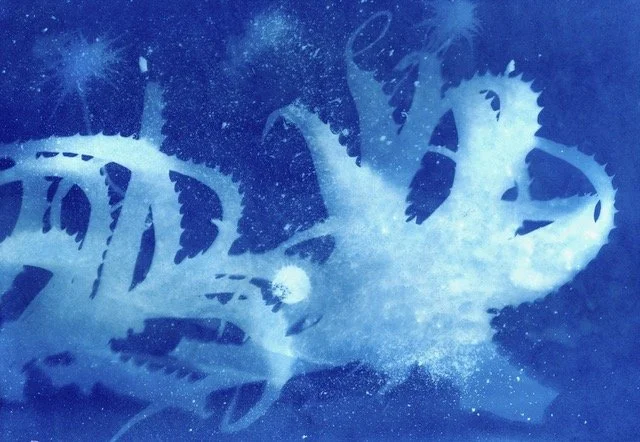

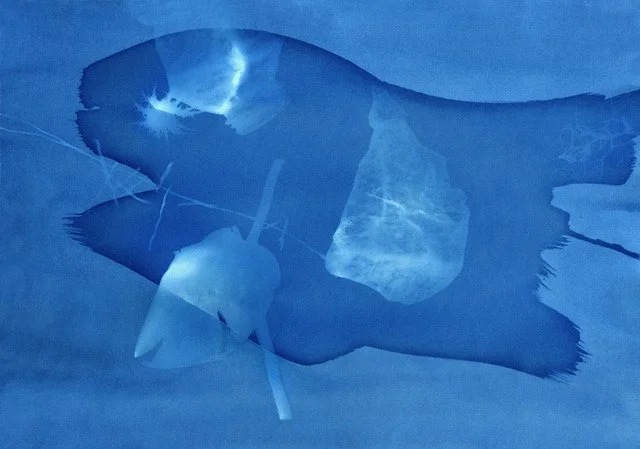
Nadège Mériau completed an MA in Photography at the Royal College of Art in 2011. She has been shortlisted for the Bloomberg New Contemporaries, nominated for the Arles Discovery Award and the Prix Pictet. Her recent exhibitions and projects include Tended at Somers Gallery; Photosensitive at Milton Gallery; ING Discerning Eye at Mall Galleries; Room Share 8 at Safehouse 1; and Darkroom London at The Grafton. In 2023, she undertook a residency at Joya: arte + ecología, and in 2025 contributed to Catalogue of Failures and Abridged Magazine.
Images used with permission | Text by A La Luz & Nadège Mériau | Please do not re-publish any of the above without prior written consent