Athens | Part I
Lily Hassioti + Athens Open Studio
Over the summer, we spent some time in Athens meeting climate-focussed creatives working in this bustling city. We’ll hear soon from artist Becky Campbell (a Scottish artist working in Athens) and from two project managers involved during the construction of the city’s National Opera – a feat of sustainable design. But first, we’re delighted to introduce artist Lily Hassioti.


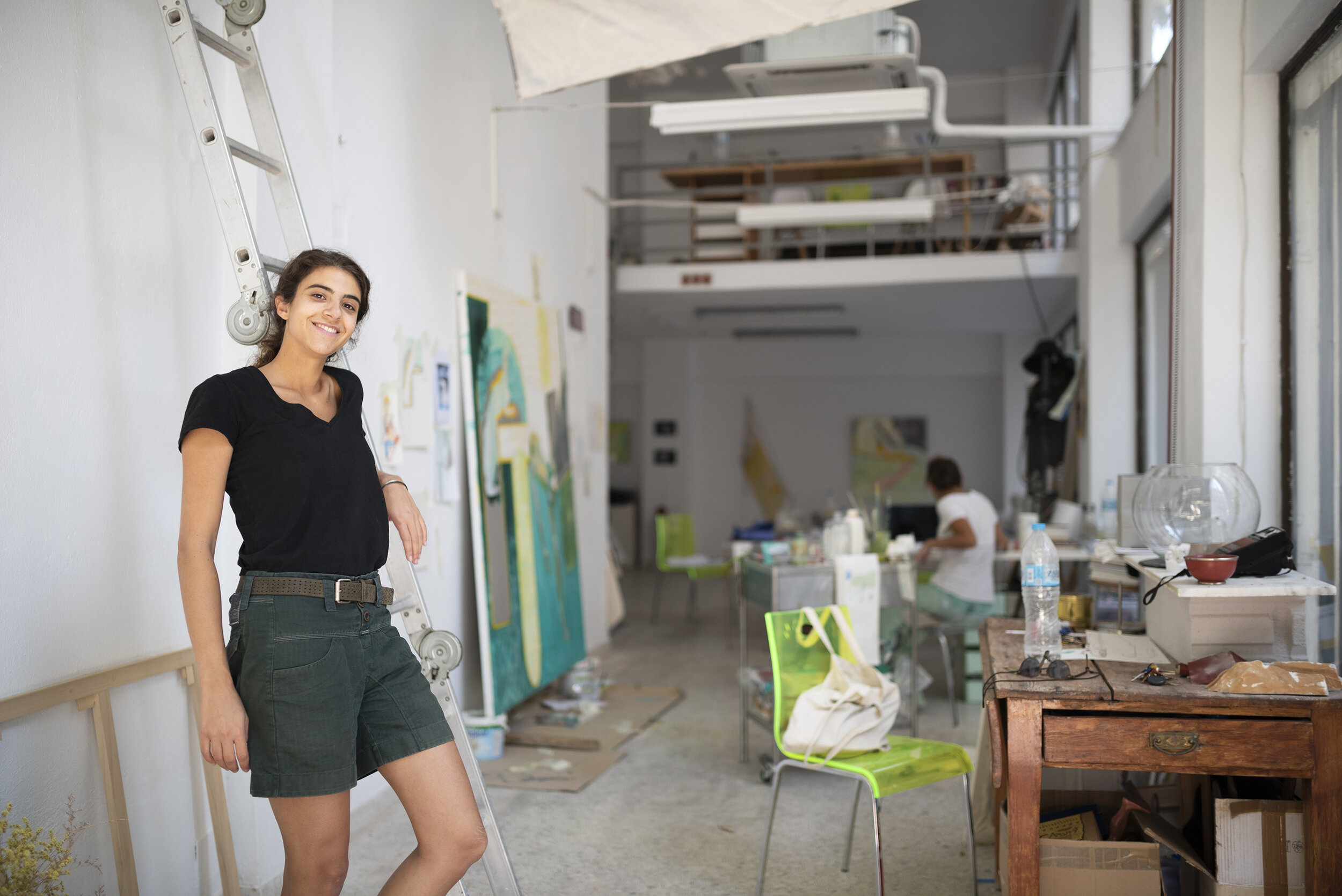
Describing herself as “artist & sailor”, Lily Hassioti recently co-founded Athens Open Studio: a space for creativity and education. Her recent exhibitions include Kinono Art Gathering on the island of Tinos (2018), Athens Digital Arts Festival (2017), RSA New Contemporaries (2017) and Paradigm Electronic Arts (2016).
For the most part, Lily looks at the cultural, emotional and spiritual impact that rapid technological development is having on our everyday lives. She creates artworks describing human manipulation of the environment and often navigates what she calls the “integrated post-digital landscape” of today, producing installations and interactive projects. Lily encourages audience engagement, even asking studio visitors to contribute to her projects.
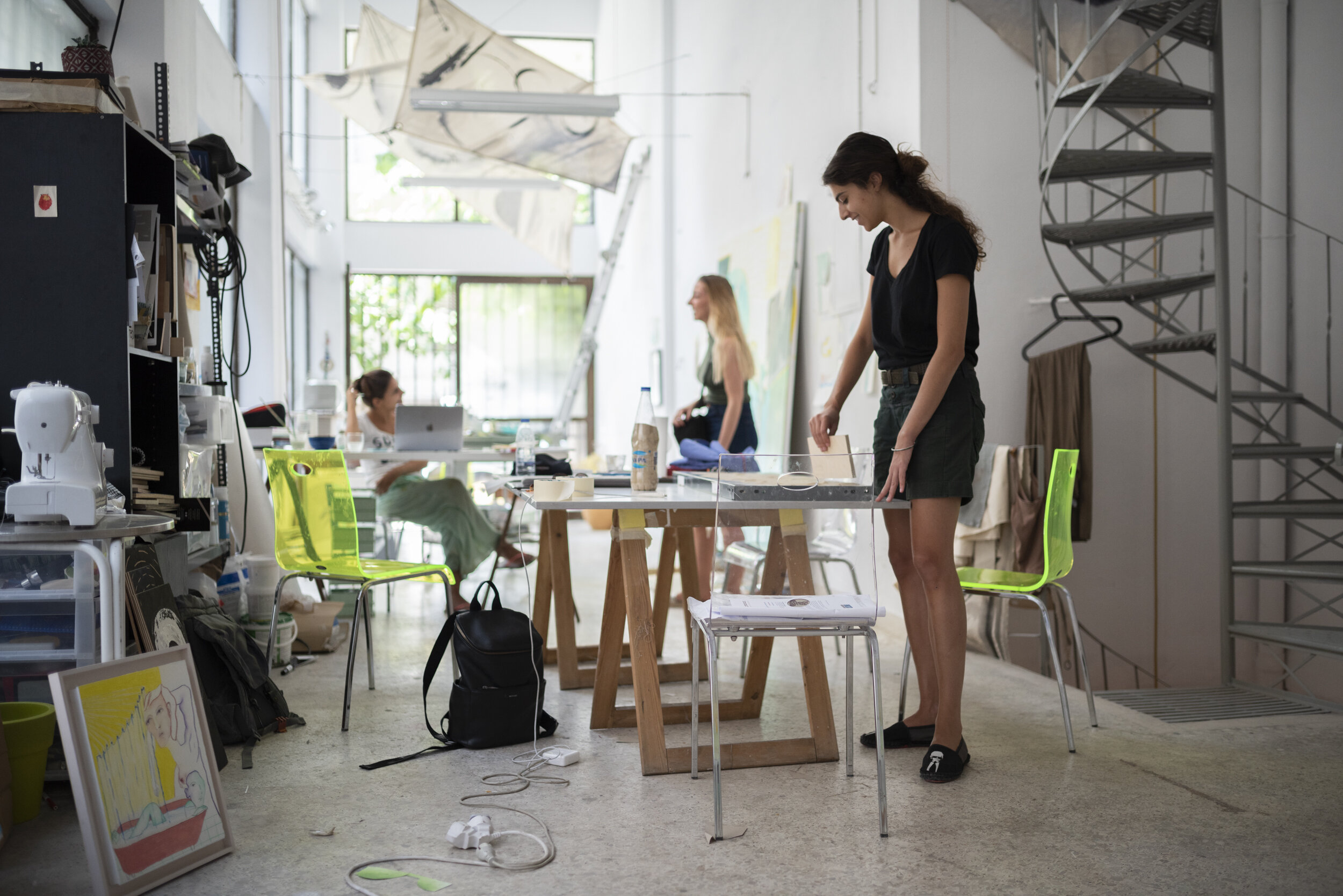
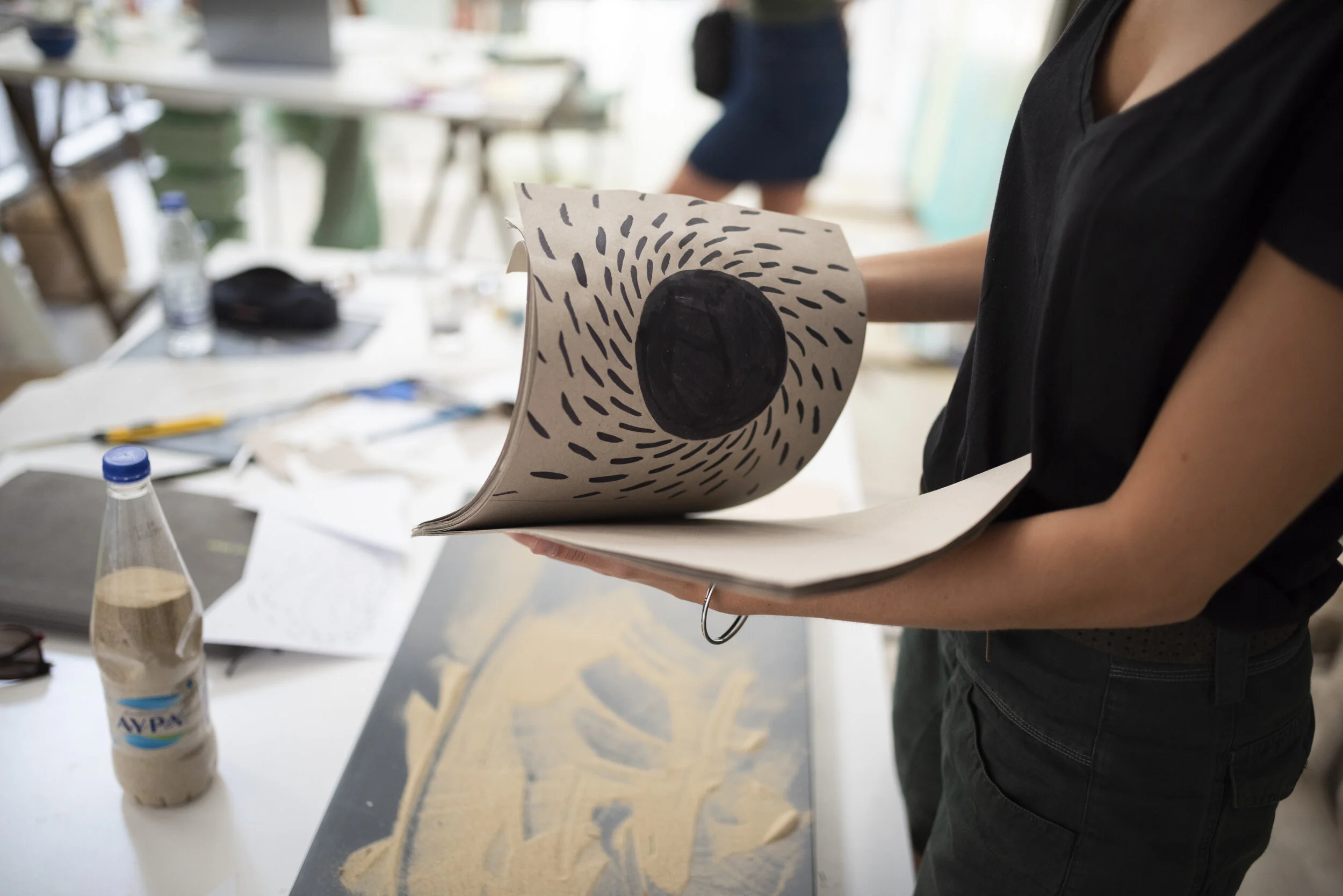
Working with a variety of natural and found materials, Lily combines analogue and digital processes. Her working space in Athens Open Studio is jam-packed full of her finds, each in varying states of transformation. Her workspace – which she shares with studio co-founder, artist Ileana Arnaoutou – is a sea of rope, tape, sailcloth, thread, sand, printing-tools, a sewing machine, paints…

Resistance
Lily’s Sails highlight society’s need to embrace renewable sources of power.
By considering how ancient and analogue technologies can be re-appropriated to provide contemporary solutions, Lily’s latest body of work explores alternative sources of clean energy. Her Sails discuss wind power, hinting at Greece’s staggered movement toward renewables.
In this series, Lily is laser-cutting the pattern of barometric fields upon sailcloth. This creates a paradox: the wind is physically depicted on the sail but of course the sail itself does not function; the wind makes no useful impact on the cloth. The comment here is that Greece is yet to tap into the full potential of wind power, on its islands and at sea; partly because of government policy, partly as a result of resident resistance groups.


Looking out from Tinos (Cyclades)
Many of Greece’s islands have historically depended on locally generated, often diesel-fired power. Tinos, where Lily spent much of her childhood, is known for its wind. It is part of everyday life on the island, so much so that Tinos has its own vernacular way of describing its force – categorising a gale by the weight of the object it might carry: chapel, chair, table, bell…
And yet, the relationship between the islands and wind energy is not straightforward. Tinos has only limited wind generation, while proposals for larger wind farms have met with resistance. For many islanders, the concern is not necessarily with renewable energy itself, but with what large-scale infrastructure might mean for landscapes whose character and beauty are central to both local identity and the tourism economy.
This tension raises a difficult question. Can the transition to renewable energy become part of the identity of the Greek islands rather than something imposed upon them? Could the islands themselves become examples of a different relationship between landscape, energy and tourism – places where sustainability is not hidden, but visible?
The debate is particularly pertinent in a country with considerable potential for renewable energy. Greece has made substantial progress in expanding wind and solar generation, while continuing to reduce its reliance on lignite and other fossil fuels. The transition, however, brings its own questions about scale, siting, ownership and the character of the landscapes in which new infrastructure is placed.
Solar installations have sometimes been perceived as less visually intrusive than wind turbines, while offshore wind offers another possible direction. None of these choices is without consequence. The challenge is therefore not simply how to generate more renewable energy, but how to do so in ways that respect the particular qualities of the places in which it is produced – and bring local communities into the process.
The Greek islands offer an especially vivid setting for this question. Their landscapes are both fragile and deeply valued, but they are also places already experiencing the consequences of a changing climate. Perhaps the question is not whether these landscapes should change, but what kind of change we want to see – and whether the transition to a cleaner energy system can become something that belongs to the islands themselves.

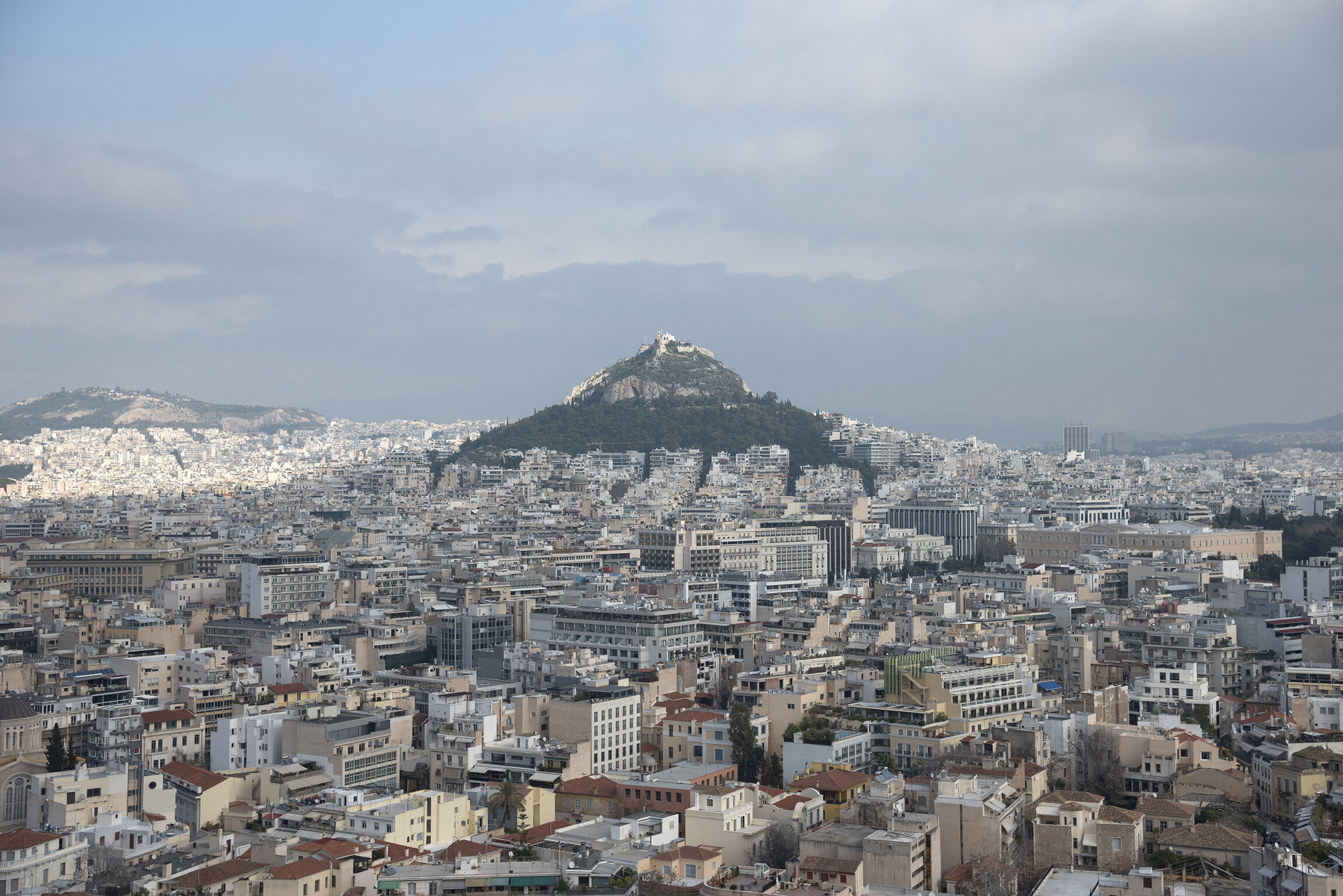
Athens Open Studio lies nestled in the city’s Ilisia district, fifteen minutes from the Museum of Cycladic Art and close to iconic Lycabettus Hill and Syntagma Square. Lily & Ileana’s venture is inspiring: they’re confidently presenting themselves as approachable, open minded creatives, contributing to the Athens art community. The studio – which has both served as a medical dispensary and mechanic’s workshop – offers life drawing sessions, portfolio preparation tutoring, writing assistance, studio time and other on-demand workshops. Their philosophy is to ‘make work restlessly, be open to new people and possibilities, learn along the way, and share it with others’. If you’re in Athens, check out what they have going on.